WordPress database error: [Duplicate entry '0' for key 'PRIMARY']
INSERT INTO `wpl6_posts` (`post_author`, `post_date`, `post_date_gmt`, `post_content`, `post_content_filtered`, `post_title`, `post_excerpt`, `post_status`, `post_type`, `comment_status`, `ping_status`, `post_password`, `post_name`, `to_ping`, `pinged`, `post_modified`, `post_modified_gmt`, `post_parent`, `menu_order`, `post_mime_type`, `guid`) VALUES (0, '2026-06-13 05:52:29', '2026-06-13 05:52:29', '<!-- wp:navigation-link {\"className\":\" menu-item menu-item-type-post_type menu-item-object-page menu-item-home\",\"description\":\"\",\"id\":\"53\",\"kind\":\"post-type\",\"label\":\"Home\",\"opensInNewTab\":false,\"rel\":null,\"title\":\"\",\"type\":\"page\",\"url\":\"https://rtsofts.com/\"} /--><!-- wp:navigation-link {\"className\":\" menu-item menu-item-type-post_type menu-item-object-page\",\"description\":\"\",\"id\":\"3569\",\"kind\":\"post-type\",\"label\":\"Portfolio\",\"opensInNewTab\":false,\"rel\":null,\"title\":\"\",\"type\":\"page\",\"url\":\"https://rtsofts.com/?page_id=3569\"} /--><!-- wp:navigation-link {\"className\":\" menu-item menu-item-type-post_type menu-item-object-page\",\"description\":\"\",\"id\":\"3575\",\"kind\":\"post-type\",\"label\":\"Contact\",\"opensInNewTab\":false,\"rel\":null,\"title\":\"\",\"type\":\"page\",\"url\":\"https://rtsofts.com/contact/\"} /-->', '', 'v25 Main Menu', '', 'publish', 'wp_navigation', 'closed', 'closed', '', 'v25-main-menu', '', '', '2026-06-13 05:52:29', '2026-06-13 05:52:29', 0, 0, '', '')

WordPress database error: [Duplicate entry '0' for key 'PRIMARY']
INSERT INTO `wpl6_posts` (`post_author`, `post_date`, `post_date_gmt`, `post_content`, `post_content_filtered`, `post_title`, `post_excerpt`, `post_status`, `post_type`, `comment_status`, `ping_status`, `post_password`, `post_name`, `to_ping`, `pinged`, `post_modified`, `post_modified_gmt`, `post_parent`, `menu_order`, `post_mime_type`, `guid`) VALUES (0, '2026-06-13 05:52:29', '2026-06-13 05:52:29', '<!-- wp:page-list /-->', '', 'Navigation', '', 'publish', 'wp_navigation', 'closed', 'closed', '', 'navigation', '', '', '2026-06-13 05:52:29', '2026-06-13 05:52:29', 0, 0, '', '')

Technology – RT Software Solutions

Category: Technology

Uncover the latest technology trends and advancements in our comprehensive technology archives. Explore a wide range of topics including artificial intelligence, cybersecurity, blockchain, internet of things (IoT), and more. Stay up to date with informative articles, expert insights, and in-depth analyses that will fuel your passion for technology. Stay ahead of the curve with our extensive collection of technology resources.

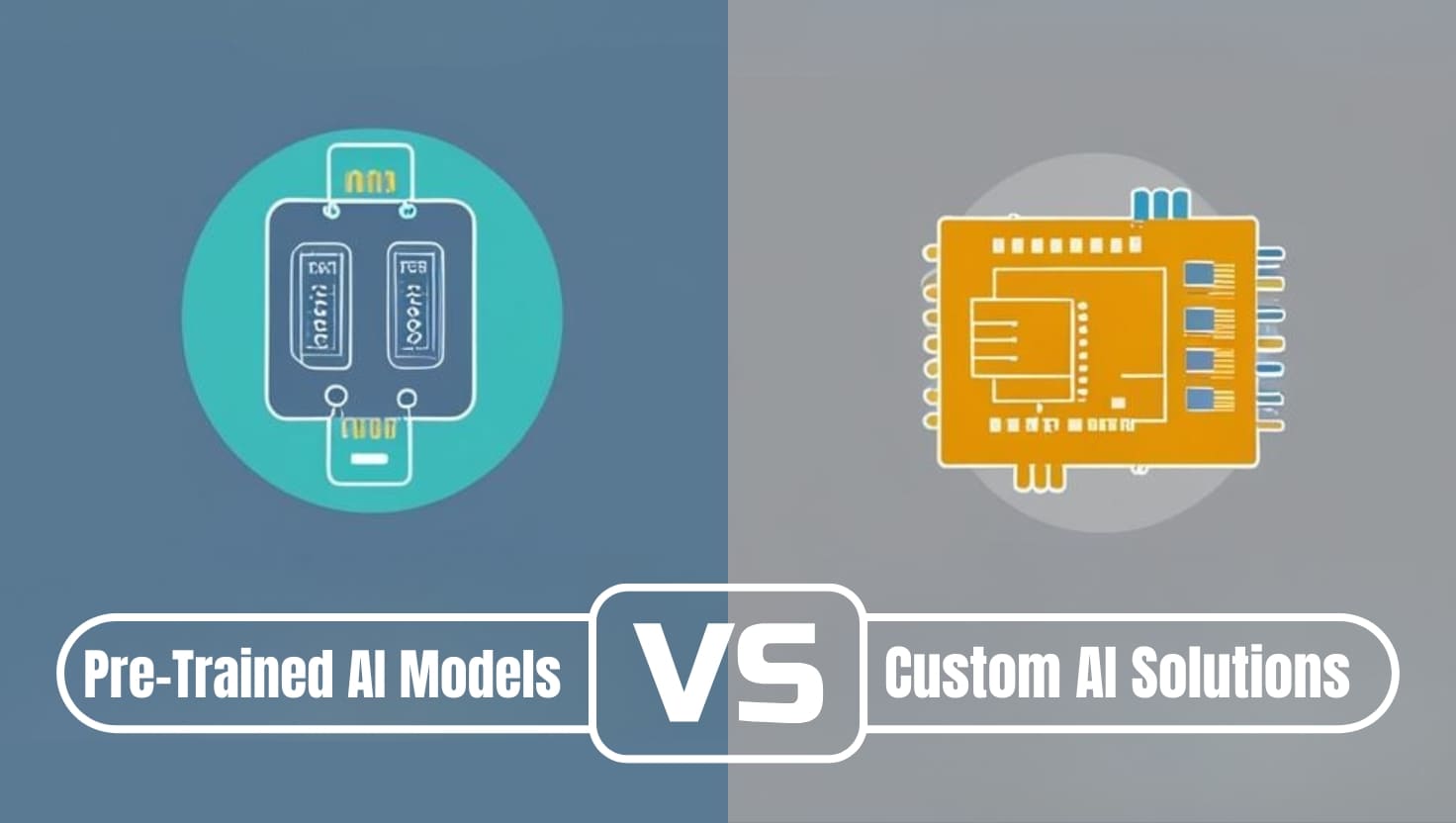
  • Benefits of using pretrained AI models vs. developing custom AI solutions

    Benefits of using pretrained AI models vs. developing custom AI solutions

    Artificial Intelligence (AI) has become an integral part of modern business operations. From enhancing customer service to streamlining internal processes, AI offers numerous advantages that can drive growth and efficiency. As organizations consider integrating AI into their strategies, a fundamental question arises: should they utilize pre-trained AI models or invest in developing custom AI solutions?

    Pre-trained AI models are designed to perform specific tasks and are readily available for deployment. These models have been trained on extensive datasets and can be integrated into existing systems with minimal effort. Many of these tools are built on popular AI models that have already proven their effectiveness in real-world applications. They offer a practical solution for businesses seeking to implement AI quickly and cost-effectively.

    On the other hand, custom AI solutions are developed to meet unique business requirements. These solutions involve building models from the ground up or significantly modifying existing ones to align with specific objectives. While this approach may require more resources and time, it provides tailored functionalities that can offer a competitive edge.

    Understanding the benefits of each approach is crucial for making informed decisions. This blog explores the advantages of using pre-trained AI models compared to developing custom AI solutions, providing insights to help businesses choose the path that best aligns with their goals.

    Benefits of Using Pre-Trained AI Models

    Pre-trained AI models are designed and trained by experts using vast amounts of data. These models are made to perform common tasks and are often available for use through simple APIs or cloud-based tools. For businesses looking to adopt AI without the heavy cost and time investment, pre-trained models offer several important benefits.

    Faster Implementation

    One of the biggest advantages of pre-trained models is the speed at which they can be adopted. Since the model is already trained and ready for deployment, there is no need to start from zero. Businesses can integrate these models into their systems within days or even hours, depending on the application. This is especially useful for businesses that need quick solutions or want to test ideas without delay.

    Cost-Effective for Most Use Cases

    Creating a custom AI solution from the ground up can be resource-intensive. It involves gathering data, hiring AI engineers, running experiments, and setting up infrastructure. Pre-trained models remove most of these costs. Businesses can use them for a monthly or usage-based fee, which is much more affordable than building something custom. This makes advanced AI capabilities available even to businesses with limited budgets.

    Proven Performance and Accuracy

    Pre-trained models are usually built by top research teams or leading tech providers. They have already been tested and fine-tuned for accuracy across a wide variety of data. These models are often benchmarked and peer-reviewed, which gives confidence to businesses using them. For common needs like text generation, image recognition, or speech analysis, these models offer reliable performance with little adjustment needed.

    Simple Integration and User Support

    Many pre-trained models are available as plug-and-play services. Providers offer detailed documentation, SDKs, and customer support, making integration easier for AI development companies. Businesses do not have to worry about setting up complex training pipelines or data preprocessing systems. The reduced complexity allows teams to focus on business goals rather than technical setup.

    Scalable and Continuously Updated

    Pre-trained models are often offered as cloud services that can handle growing user demand. As the business expands, these models can support increased traffic without needing to rebuild anything. Providers also take care of improvements, bug fixes, and security updates. This reduces the operational burden and keeps the system running smoothly over time.

    Lower Entry Barrier for Non-Technical Teams

    Not all businesses have dedicated AI experts. Pre-trained models make it easier for teams with limited technical skills to adopt AI tools. Many platforms include user-friendly interfaces and visual builders, allowing marketing, sales, or operations teams to use AI without deep programming knowledge.

    Benefits of Developing Custom AI Solutions

    Custom AI solutions are created specifically for a business’s unique goals, data, and workflows. Unlike pre-trained models, which are general-purpose and shared across industries, a custom solution is built from the ground up or fine-tuned on proprietary data. This approach often requires more time and resources but offers deeper alignment with strategic needs and long-term growth. Below are the key benefits of choosing a custom-built AI solution.

    Designed for Specific Business Goals

    A custom AI model is crafted to solve the exact challenges a business faces. This includes working with unique data formats, supporting specialized workflows, or producing outputs that match business-specific criteria. Instead of adjusting internal processes to fit a generic tool, businesses get an AI system that adapts to how they operate.

    For example, a logistics business may want an AI tool that considers specific route delays, driver performance, or weather forecasts. A custom model can be built to account for all these details, leading to smarter decision-making and better results.

    Offers a Competitive Edge

    A solution that no one else has can create a significant advantage in a competitive market. When an AI system is designed exclusively for one business, it can provide features and insights that are not available in general tools. Over time, this uniqueness becomes part of the company’s intellectual property, adding long-term value.

    Businesses can also innovate faster when they own the entire AI pipeline. They are free to experiment, test, and implement new ideas without waiting on third-party updates or features.

    Greater Control Over Data and Performance

    When developing a custom AI model, the business retains full control over how data is used, processed, and stored. The model’s architecture, training steps, and behavior can be adjusted based on evolving needs. This ensures the output quality is consistent and reliable.

    It also means that specific business rules or preferences can be added directly into the system. For instance, if a financial institution wants to include compliance checks during analysis, this can be built into the model from the start.

    More Accurate Results with Proprietary Data

    Custom models can be trained on business-owned data, which often leads to better results. Proprietary data reflects real customer behavior, product performance, or internal operations. Training on this data allows the model to understand context, patterns, and edge cases better than generic models.

    This is especially important in industries like healthcare, legal services, and manufacturing, where accuracy depends on deep domain knowledge. A custom model can be designed to capture that knowledge and turn it into useful outputs.

    Stronger Data Privacy and Compliance

    Sensitive industries require high levels of data protection and regulatory compliance. A custom solution gives businesses the ability to control data access and ensure it meets legal standards. Since data does not leave the business environment, the risks of breaches or misuse are significantly reduced.

    Industries that deal with personal information, financial records, or health data often prefer custom models for this reason. It gives them peace of mind that customer trust and legal requirements are both being respected.

    Flexible to Update and Scale

    Business environments change often. New customer demands, new regulations, or new types of data can emerge. A custom AI model is easier to update and adapt. Since the business owns the full model and infrastructure, updates can be made quickly without waiting for vendor support or contract changes.

    As usage grows, the model can be optimized to handle more users, more requests, or more tasks. This flexibility supports both immediate needs and long-term planning, making the AI system a lasting part of the business strategy.

    How to Decide: Pre-trained AI Models vs. Developing Custom AI Solutions

    Choosing between a pre-trained AI model and a custom AI solution depends on many factors. Every business has different needs, budgets, and goals. Understanding what each option offers and how it fits into a business strategy helps in making the right choice.

    This section highlights key decision points to consider.

    Nature of the Problem

    The first step is to evaluate the complexity and uniqueness of the problem. Pre-trained models are a good fit for standard tasks like image recognition, translation, or document summarization. These tasks are well-studied and do not need much customization.

    However, if the problem involves specific business processes or domain knowledge, a custom model may be more suitable. Custom models can be designed to include rules, logic, and features that are unique to the business.

    Time to Market

    If speed is important, pre-trained models are the better choice. They are already trained, tested, and often packaged for quick use. Businesses looking to launch a feature quickly or test a concept without delay can benefit from these ready-made tools.

    Custom solutions take more time. They involve planning, data preparation, model design, testing, and revisions. This is ideal for businesses working on a long-term product or strategic AI investment.

    Available Budget

    Budget plays a major role in this decision. Pre-trained models reduce the need for hiring data scientists or building infrastructure. They work well within limited financial plans and can be scaled as the business grows.

    Custom AI solutions require more upfront investment. Costs include data collection, team hiring, training infrastructure, and ongoing maintenance. The return on investment is often higher in the long run, but the initial spending must be justified.

    Data Requirements

    Businesses that have access to large volumes of quality data often benefit more from custom solutions. Their own data can be used to create models that reflect real user behavior, business operations, and challenges.

    For businesses that do not have such data or do not need highly specific outputs, pre-trained models can still deliver strong performance.

    Control and Customization

    Custom AI solutions provide full control over every part of the AI system. Businesses can decide how the model learns, how it behaves, and how it changes over time. This flexibility is useful for those who want complete alignment with brand values, compliance needs, or technical preferences.

    Pre-trained models offer less flexibility. Businesses have to accept the model as it is, with limited tuning options. While this is acceptable for many tasks, it may not meet the standards for more regulated or sensitive environments.

    Long-Term Goals

    For businesses testing AI for the first time or working on short-term projects, pre-trained models offer a practical entry point. They are low-risk and easy to evaluate.

    For those planning to build core services around AI or aiming to use it as a key differentiator, custom development may be the better path. It supports deeper integration, continuous improvement, and greater ownership of the solution.

    Conclusion

    Choosing between pre-trained AI models and custom AI solutions is not a one-size-fits-all decision. Each option brings a distinct set of benefits that serve different business priorities. Pre-trained models offer speed, affordability, and proven performance for common tasks. They are ideal when time, budget, and simplicity are central to the decision.

    On the other hand, custom AI solutions provide the flexibility and precision that many businesses need for growth and differentiation. With full control over data, design, and performance, custom-built systems allow deeper integration into business strategies and long-term planning.

    Understanding these benefits helps businesses make AI choices that are practical today and scalable for tomorrow. The decision also reflects how a business approaches innovation, whether by quickly adapting industry-standard tools or by shaping unique capabilities tailored to specific needs.

    This is where the broader AI ecosystem also plays a role. As businesses explore advanced AI strategies, insights from the approaches used by top AI development companies can offer valuable context. These firms often showcase how both pre-trained and custom models contribute to solving real-world challenges across different industries.

    By clearly weighing the benefits on both sides, businesses are better equipped to choose the AI path that not only fits current goals but also builds a strong foundation for what comes next.

  • How Does Salesforce Agentforce Work?

    How Does Salesforce Agentforce Work?

    Customer service is moving so fast, and with the help of AI, it will eventually play a massive part in future interactions. Agentforce by Salesforce is an uber-powered tool that helps businesses make intelligent AI service agents that automate their support workflows and provide excellent customer experiences. This article explores in depth the features of Agentforce with how it connects with Salesforce Data Cloud and its impact across Salesforce Service Cloud, Sales Cloud, and Marketing Cloud from an instance-tested proof point recently where they built agents that could deflect cases and build technologies such as scheduling installations.

    Agentforce: Beyond Traditional Chatbots, Powered by Data Cloud & Integrated Across Clouds

    • Agentforce goes beyond the boundaries of conventional chatbots by defining agent behaviors and responsibilities using natural language processing. Agent responsibilities differ from traditional chatbots. Its power is enhanced by the seamless weaving throughout Salesforce Data Cloud. When placed within the greater Salesforce eco-system, its influence is greatly improved as it speaks to the Service Cloud, Sales Cloud, and Marketing Cloud of the rest.
    • Agentforce, when Data Cloud and other clouds are wired, allows users to build tasks & guardrails for agents with human language using the same customer data platform that informs AI decisions, removing silo barriers. Unlike in the old systems rigid dialog trees that connected our agents, Agentforce is connected to Data Cloud.

    Key Features and Functionalities:

    Topic Definition:

    • Topics are the building blocks; they set what an AI agent can and cannot do.
    • Users can set up what jobs an agent will do and won’t, defining “guardrails” for how it should act.
    • Instead of hard-to-read rules and logic, natural language descriptions derived from the deep data of the Data Cloud (which brings together service cloud, sales cloud, and marketing) make it easier to define agents’ tasks.

    Action Creation:

    • Actions allow the agents to take action through Salesforce Flows, Apex classes, or prompts.
    • Flows can be utilized for information retrieval (e.g., fetching available install times from Service Cloud) and to perform an action (e.g., setting the lead status in Sales Cloud, launching Marketing Cloud journeys), updating data in the relevant worlds of Data Cloud and Cloud.
    • This enables pre-built processes from Salesforce to be integrated into agent workflows, with the data cloud acting as a single source of truth across all Salesforce clouds.

    Contextual Understanding:

    • Agentforce employs a conversational context to provide more understandable responses to complex user requests, using the rich context available through the Data Cloud (all interactions from the Service Cloud, purchase history from the Sales Cloud, and marketing engagements in the Marketing Cloud).
    • It can understand vague statements and retort appropriately, showing very deep contextual comprehension.
    • Agentforce plans and performs the actions dynamically throughout the conversation, using the unified customer profile in Data Cloud as an execution context.

    Planning and Execution Dynamically:

    • Agentforce generates dynamic plans in real time according to the context of the data from the Data Cloud.
    • Execute flows, data shaping, and response filtering by conversation to front-end the workflows of all clouds (Service Cloud, Sales Cloud, and Marketing Cloud), ensuring accuracy and relevance.

    Guardrail Enforcement:

    • Agentforce provides guardrails (pre-defined rules) to stop agents from doing things beyond their authority.
    • Evaluate off-topic requests and take users to a pre-approved topics list-controlled interaction or off the site.
    • It stops actions outside defined ranges, e.g., data validation based on Data Cloud (which can be sourced from Sales Cloud delivery dates competing with our application), until an installation is scheduled after delivery.

    Security and Safety:

    • Built-in harm and toxicity detection to keep the agents from engaging in irrelevant or malicious conversations with customers.
    • Detects and rejects prompt injection attacks, faces declining recrudescent attempts to reverse engineer.

    Multi-Channel Deployment:

    Agentforce (powered by Data Cloud’s unified data) allows the distribution of AI agents to many channels for full-blown agent conversation in Service Cloud, Sales Cloud, and Marketing Cloud interactions on an end-to-end consistent customer experience.

    Building an Installation Scheduling Agent with Data Cloud and Cross-Cloud Integration:

    This demonstration showed how Agentforce created an agent scheduling the installation appointment. New “appointment management” topic (with associated actions- Salesforce flows) on the agent side, so they could

    • Get free slots for installation, pulling real-time scheduling data from the Service Cloud through the Data Cloud.
    • Automate bookings (updating customer records and scheduling systems in the data cloud and, who knows, maybe sending some follow-up campaigns to the marketing cloud as well)
    • Validate user input (Installation dates must be after delivery dates) by consuming data from the Sales Cloud in the Data Cloud through Customer Orders and Deliveries.
    • Resolve vague requests (e.g., “That Friday, okay? but Biffy Morning?”) by utilizing past service requests, sales history from Data Cloud (past campaigns engagement) stored in the customer preferences, and any prior interactions.

    The Power of Natural Language and Unified Data Across Clouds:

    The natural language descriptions used by Agentforce and leveraging Salesforce Data Cloud + integration capabilities in Service Cloud, Sales Cloud, and Marketing Cloud are key to maintaining developer simplicity dialog treeless experience. Most importantly, allowing an agent to speak with customers is a deep well of insights. This enables users to author nuanced agent behaviors based on plain language with an immovable customer table to conveniently deliver the proper replies at scale in all customer touchpoints.

    Conclusion:

    Salesforce Agentforce, when connected with Salesforce Data Cloud and all these are synced up in Service Cloud, Sales Cloud, and Marketing Cloud, is a step ahead in terms of customer experience powered by AI. Businesses that leverage natural language processing, strong guard rails, and a CDP unified customer data can now build at-scale intelligent agents that automate processes and improve customer experiences at all stages of the selling journey and company-wide for any customer-facing department. This harmony will only heighten as AI matures and the marrying of intelligent automation with unified data is achieved in customer relationship management.

  • Artificial Intelligence: Understanding Strong AI vs. Weak AI

    Artificial Intelligence: Understanding Strong AI vs. Weak AI

    Artificial Intelligence (AI) has become a buzzword in recent years, promising advancements that challenge our perception of human-like intelligence. Within the field of AI, two terms that often surface in discussions are strong AI and weak AI.

    These terms describe different levels of AI capabilities and prompt intriguing questions about the boundaries of artificial intelligence.

    In this blog post, we will delve deeper into the distinctions between strong AI and weak AI, explore their practical implications, and ponder the current state of development in each domain.

    The Power of Strong AI

    Strong AI, also known as Artificial General Intelligence (AGI), represents the pinnacle of AI achievement. It refers to AI systems that possess cognitive abilities equivalent to, or surpassing, those of human beings.

    These systems exhibit not only problem-solving capabilities but also a comprehensive understanding of the world and the ability to engage in creative thinking and learning.

    Strong AI would essentially replicate human-like intelligence in machines, complete with self-awareness and consciousness.

    While strong AI holds tremendous potential, it remains a concept that has yet to be fully realized. Achieving genuine strong AI presents complex challenges that encompass the entire spectrum of human intelligence, including perception, reasoning, and emotional intelligence.

    Although progress has been made in specific areas of AI research, the development of a truly autonomous and self-aware machine remains an elusive goal.

    Exploring the Reach of Weak AI

    In contrast to strong AI, weak AI, also referred to as Narrow AI, refers to AI systems that are designed to excel in specific tasks within a limited domain.

    These systems leverage machine learning algorithms and data to perform well-defined functions, such as image classification, speech recognition, or recommendation systems.

    Weak AI demonstrates remarkable proficiency within its designated domain, but it lacks the breadth of general intelligence exhibited by humans.

    Weak AI has experienced significant advancements in recent years, leading to transformative applications across various industries.

    From virtual assistants like Siri and Alexa to automated customer service chatbots and autonomous vehicles, weak AI has revolutionized how we interact with technology.

    By focusing on narrow tasks, weak AI systems can deliver remarkable efficiency and accuracy, enhancing productivity and enabling new possibilities in sectors such as healthcare, finance, and transportation.

    Implications and Considerations

    The distinctions between strong AI and weak AI have profound implications for both the technological landscape and society as a whole. The development of strong AI carries implications that extend beyond conventional AI applications.

    It raises questions about the nature of consciousness, the potential for self-aware machines, and the ethical considerations surrounding human-like intelligence in non-biological entities. These concerns encompass privacy, autonomy, accountability, and even philosophical debates about the essence of consciousness.

    Conversely, weak AI systems, while lacking the breadth of strong AI, have immediate practical implications. These systems can significantly impact industries and reshape the way we work and live.

    However, ethical considerations regarding biases, transparency, and the potential displacement of human labor remain crucial to address.

    Current State of AI Development

    As of current state of AI development, strong AI remains a tantalizing goal that researchers and scientists strive to achieve. While substantial progress has been made in specific domains such as natural language processing and computer vision, creating a machine capable of human-level intelligence across diverse tasks remains a formidable challenge.

    On the other hand, weak AI continues to flourish and evolve rapidly. New breakthroughs in machine learning, deep learning, and neural networks have led to significant advancements in narrow AI applications. Industries worldwide are leveraging the power of weak AI to enhance efficiency, improve decision-making processes, and offer personalized experiences to consumers.

    The distinctions between strong AI and weak AI

    The distinctions between strong AI and weak AI shed light on the boundaries and possibilities of artificial intelligence. Strong AI represents a future where machines possess human-like intelligence, complete with consciousness and self-awareness.

    Although still in the realm of speculation, strong AI prompts profound questions about ethics, philosophy, and the nature of intelligence.

    Meanwhile, weak AI systems have already transformed various industries and continue to drive innovation. They excel within specific domains, leveraging machine learning techniques to perform tasks more efficiently than ever before. The rise of weak AI raises its own set of ethical considerations, particularly regarding transparency, fairness, and the future of work.

    As AI continues to evolve, it is imperative to foster a multidisciplinary dialogue that encompasses not only the technological advancements but also the societal, ethical, and philosophical implications of AI development.

    Striking a balance between innovation and responsible deployment is crucial to ensure that AI technologies align with our collective values and contribute positively to humanity’s progress.

    Also read: Generative AI: Exploring the Wonders of Creativity and Innovation

  • Generative AI: Exploring the Wonders of Creativity and Innovation

    Generative AI: Exploring the Wonders of Creativity and Innovation

    In recent years, the field of artificial intelligence (AI) has witnessed a remarkable advancement in generative AI technologies. Generative Artificial Intelligence refers to the development of systems capable of creating new content, such as images, music, text, and even entire virtual worlds. It has opened up unprecedented opportunities for creativity, innovation, and problem-solving.

    In this blog post, we’ll delve into the fascinating world of generative AI and explore its potential applications across various domains.

    Understanding Generative AI

    Generative AI revolves around the concept of training algorithms on vast datasets to learn the patterns, styles, and characteristics of a given domain. These algorithms then use that knowledge to generate new, original content that closely resembles the training data.

    Generative AI techniques include Generative Adversarial Networks (GANs), Variational Autoencoders (VAEs), and Recurrent Neural Networks (RNNs), among others.

    Applications in Art and Design

    One of the most captivating applications of generative AI lies within the realms of art and design.

    Artists and designers can leverage generative models to produce unique and visually stunning creations. For instance, GANs can generate realistic images that blur the line between the real and the imaginary.

    Artists can explore new artistic styles, generate new characters or landscapes, and push the boundaries of human imagination.

    Assisting Content Creation

    Generative AI is transforming content creation across various industries. Writers can utilize language models to generate coherent and contextually relevant text, helping them overcome writer’s block or augment their creative process.

    Video game developers can employ generative AI to create immersive virtual worlds and populate them with unique characters and objects, enhancing gameplay experiences. Similarly, musicians can experiment with AI-generated melodies and harmonies to create novel compositions or assist in music production.

    Enhancing Healthcare and Medicine

    Generative AI is making significant strides in healthcare and medicine. It enables researchers to generate synthetic medical images, aiding in the development and evaluation of new imaging techniques.

    Moreover, generative models can assist in drug discovery by generating virtual molecules with desired properties, potentially accelerating the development of new medications. Additionally, AI-generated data can help healthcare professionals analyze patient data, predict outcomes, and personalize treatment plans.

    Driving Innovation in Design and Manufacturing

    The integration of generative AI in design and manufacturing processes has revolutionized product development. By employing generative design techniques, engineers can explore a vast array of design possibilities and optimize for various constraints, resulting in lighter, stronger, and more efficient products.

    This technology has proven especially useful in fields like architecture, automotive design, and aerospace engineering, where complex structures and advanced optimization are essential.

    Ethical Considerations and Challenges

    While generative AI presents boundless opportunities, it also raises important ethical considerations. Issues like copyright infringement, deepfakes, and bias in training data must be addressed.

    Ensuring transparency and accountability in the creation and use of generative AI is crucial. Additionally, addressing the potential impact of AI on employment and the socio-economic landscape requires thoughtful consideration and proactive measures.

    Generative AI

    Generative AI represents a revolutionary leap in the world of artificial intelligence, unleashing new realms of creativity and innovation. From art and design to healthcare, manufacturing, and beyond, its applications span numerous domains and industries.

    As generative AI continues to evolve, it is essential for researchers, developers, and policymakers to work together to harness its potential while mitigating potential risks.

    By striking the right balance, we can unlock the transformative power of generative AI and shape a future where creativity knows no bounds.

    You may also like: Explore the World of Technology with DailyTech.pk